


What to wear guide - Yachting
Contents:
1) Safety first!
Whether you are dinghy sailing or cruising or other watersports you will need a lifejacket or buoyancy aid.
Why do I need a lifejacket or buoyancy aid?
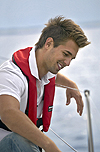 Although you may be a good swimmer, the water round the British coast and Estuaries can be very cold and there is often a very strong under-current.
This will all effect your ability to swim and to get yourself back to your boat.
What is the difference?
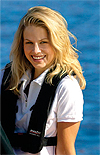 A Lifejacket will support you completely whilst in the water with a collar that will keep your face out of the water. A Buoyancy aid is an aid to swimming and will give you some buoyancy to assist you in the water.
Which one do I need for yachting?
On a bigger boat you will need a Lifejacket. Children tend to wear a Lifejacket with permanent buoyancy, adults often wear an inflatable lifejacket (either manually inflated by pulling a cord, or automatically inflated as you hit the water).
If you fall over-board from a larger boat, you are likely to be in the water for some time whilst the boat is turned around to come and retrieve you or if you need to self rescue. You are likely to be sailing in rougher and colder waters than smaller boats so a lifejacket is absolutely essential.
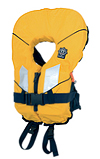 Never get a lifejacket or buoyancy aid too large for a child!
Never be tempted to buy a lifejacket or buoyancy aid for a child that is too large for them and you think they will grow into. If a lifejacket or buoyancy aid is too large and your child falls into the water, as they hit the water it will rise up. A loose fitting lifejacket or buoyancy aid could rise up over their head and also trap the arms. In this case the child would not be even able to try to swim.
Always buy a correctly fitting lifejacket or buoyancy aid!
We sell the following Lifejackets:
Lifejackets for children:
- For babies - Crewsaver Euro 100N or Spiral 100N
- For children - Crewsaver Euro 100N or Spiral 100N
- For junior - Crewsaver Euro 100N or Spiral 100N
Lifejackets for adults:
Inflatable lifejackets:
- Quickfit 150N Lifejacket, manual and automatic versions with or without harness
- Winner 150N Lifejacket, manual and automatic versions with or without harness
Lifejackets with permanent buoyancy - Helly Hensen in shop or to order
Click here to view childrens and adults Lifejackets in the on-line shop
2) Harnesses
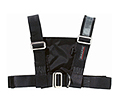 When sailing in rough weather it is essential to wear a harness and safety line when moving forward to change sails, putting down an anchor or any kind of deck work. This should be attached to an appropriate fastening.
In rough weather children should always wear an attached harness/safety line even in the cockpit. If you are sailing on your own or off shore it is also a good idea to wear the harness - even at the helm.
We sell the following Harnesses and Safety lines:
Lifejackets that have harnesses attached:
Inflatable lifejackets - adult:
- Quickfit 150N (manual or automatic - choose version with harness)
- Winner 150N (manual or automatic - choose version with harness)
Already inflated lifejackets - children
- Crewsaver Supersafe 100N (child / large child)
Harnesses sold separately:
- Baltic Safety Harness - adult
- Crewsaver safety harness - child
Safety lines:
- Baltic - various, 2 hook, 3 hook and elasticated safety lines
- Crewsaver self-locking safety line
Click here to view Safety Harnesses and safety lines in the on-line shop
3) Keeping warm and dry:
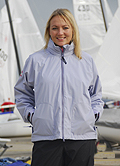 Keeping warm whilst sailing will keep you comfortable. Wind is stronger at sea than on land (even in an estuary) so you will feel the chill much more.
Of course the time of year, weather conditions and type of sailing will affect your clothing choices as well. Will it be inshore, coastal or off-shore sailing? How active do you need to be in the garment and also your personal preference, what you find comfortable. All important too - footwear and gloves are detailed in sections 3 and 4.
Clothing to suit the conditions:
It is about being prepared for the conditions you are sailing in. So for example in calm summer conditions you may be wearing shorts and a t-shirt with deck shoes and cap on deck.
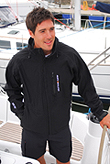 Warm with a slight wind might require longer casual trousers, perhaps a micro-fleece and lightweight waterproof jacket on hand.
Waterproofs will be required as it gets windier with a spray.
Rough weather will require a substantial waterproof / breathable jacket and trousers with under-layering.
Very rough - highly waterproof / breathable jacket for off-shore severe weather conditions.
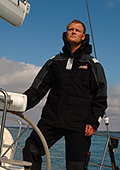 In-shore, Coastal or Off-shore?
Clothing categorised as suitable for Inshore, Coastal or Offshore sailing basically means that the garment is becoming more substantial (tougher and heavier material), more technical (higher waterproof / breathability ratings) with more features depending upon how severe the weather conditions could be that the garment is designed for.
So an Off-Shore garment would be designed for the most severe weather conditions.
Layering systems
Many manufacturers talk about a layering system. With the right garments, layering can be highly effective at keeping out water and keeping you warm in cold weather conditions.
Musto in particular recommend their 3 layer system. The key to a successful layering system is to combine garments that are breathable as well as waterproof, so moisture is not only kept out but allowed to escape as well.
An effective 3 layer system might consist of thermal underwear, breathable middle layer top or fleece, effective waterproof / breathable outer layer.
4) Footwear
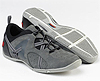 You will need footwear you can get wet, that has a good grip, that isn't too cumbersome and will keep you warm enough for the weather you are sailing in.
Deck shoes:
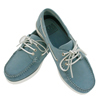 Wear deck shoes designed for sailing that you can get wet and have a good grip on wet decks. Classic deck shoe styles might be canvas or leather, also trainer style deck shoes - but designed for easy drainage of water and grippy sole non slip on the deck.
Long or short sailing boots for wet weather:
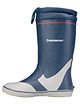 Again make sure these are boots designed for sailing - rather than agricultural wellies.
They will have features such as marine soles for deck grip, drawstrings to keep water out, broad for easy removal if heavy in water.
Footwear suitable for yachting :
These range from the basic canvas 'plimsole style' deck shoe and classic leather styles to Musto trainer style deck and race shoes.
5) Accessories
Gloves
Gloves are needed when handling rope, especially with wet hands. They are used for protection, better grip and to keep your hands warm. They need to be tough (leather or kevlar are popular). Popular for yachting are the 3 fingered styles leaving the thumb and index finger free to help you get grip.
Click here to view our gloves on line.
Hat

 Either a warm woolly hat for cold weather or a hat with a shade that can clip on to your clothing for hot weather. So many sailors lose their hats in the wind!
See our hat's on-line - click here.
Wet glasses
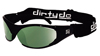 Sunglasses designed for use on the water have frames that let water flow out, hydrophobic lenses that bead away water, head band so they don't fall off and other sports features.
See our Dirty Dog wet glasses - click here.
We also sell head bands separately for keeping glasses on when active.
Bag
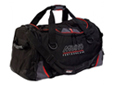 Don't forget you'll need a bag to get all this gear to the club and take the wet stuff home. See our bags and luggage section on line - click here.
Dry cases for you mobiles phone
Its always a good idea to protect your mobile in a watertight container in case of it getting wet. We sell the Musto Micro Comms Case, Comms Case and Crewsaver's Dry Case. These float too!
Click here to find dry cases on-line.
Taking your dog sailing?
 and don't forget if you’re taking your pet on or near the water, their safety should be just as important as yours.
To view our pet buoyancy aids - click here.